
For the moments that matter, including those for which no ceremony already exists.
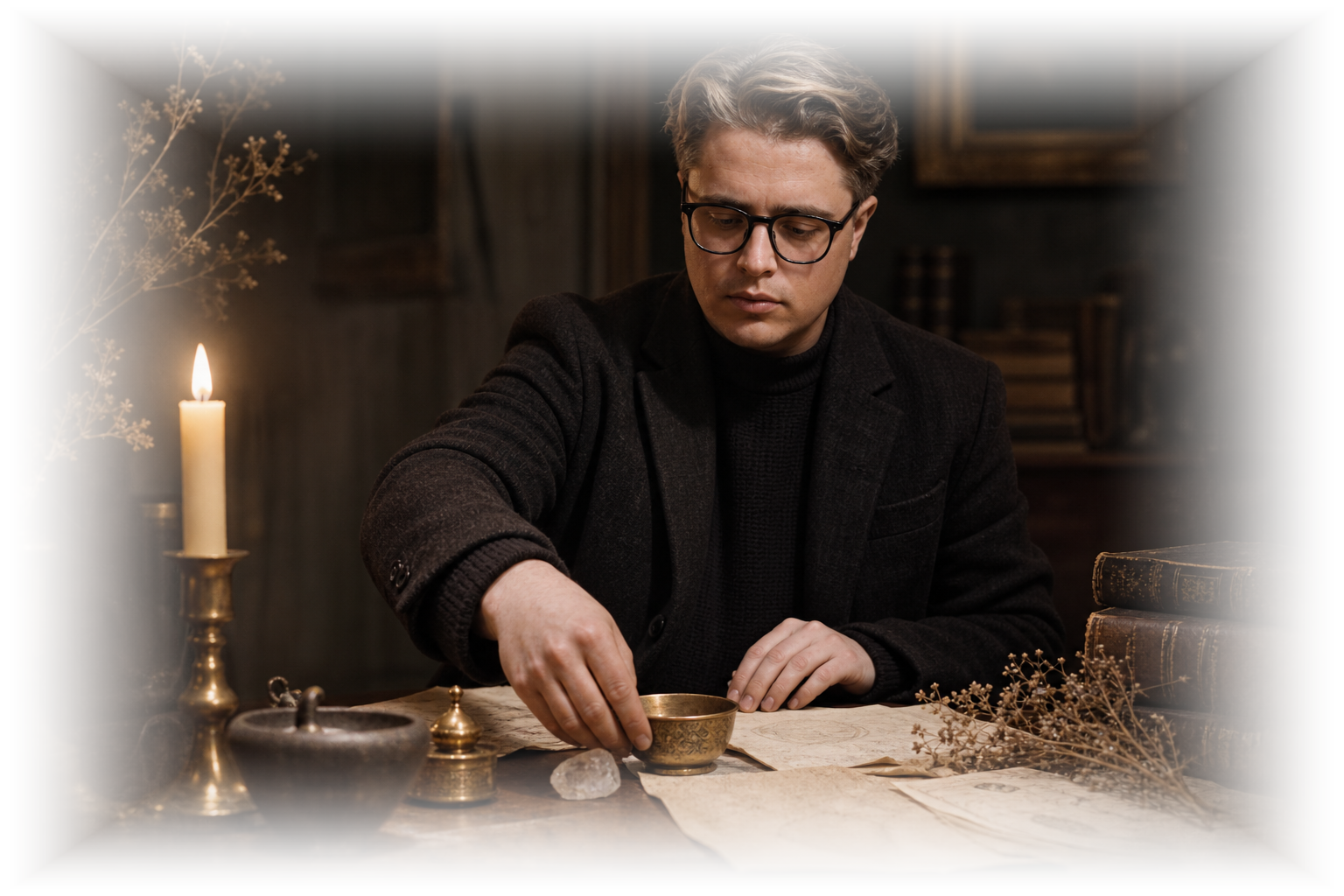
We have familiar ways of marking weddings, funerals and certain milestones. But many of the experiences that alter a life arrive without a script. We leave homes, end relationships, change identities, survive upheaval, make private commitments and carry losses that the wider world scarcely notices.
I create and personally conduct bespoke rituals to acknowledge such moments. They can be intimate and quiet or shared with a gathering. They can be solemn, joyful, theatrical or simple. The point is not to imitate an established ceremony, but to find a form that belongs to your experience.
What is a bespoke ritual?
A bespoke ritual is a ceremony created for a particular person, circumstance and purpose. Rather than choosing from a standard script, we begin with the story of what has happened and what you would like to mark.
From there, I consider the words, gestures, objects, sounds, silences and sequence that might give the occasion shape. A meaningful ritual does not need to be complicated. Sometimes one deliberate action, properly understood, can carry more weight than an hour of ornate language.
The occasions nobody gives us a ceremony for
Endings: A divorce or separation, an estrangement, the end of a friendship, departure from a workplace or community, or the closing of a chapter that has defined you.
Beginnings: Moving into a new home, taking a name, making a commitment, entering parenthood or acknowledging a new way of living.
Remembrance: A private memorial, an anniversary, a goodbye that never took place, or the recognition of someone or something whose loss has not been publicly marked.
Changes that resist a label: A period of caring, a difficult transition, recovery, a life redirected, or the decision to put something down and carry something else forward.
These are possibilities, not a catalogue of prescribed services. You may have an occasion I have not named. That is often where the most interesting conversation begins.
What might actually happen?
Imagine a farewell to a family home: a walk through familiar rooms, memories spoken aloud and a final deliberate closing of the door. Or a ritual following a separation: an acknowledgement of what mattered, an object laid down, a promise about how to enter the next chapter. Or a gathering of friends to remember someone after the formal funeral has long passed.
These are imagined examples, not accounts of former clients. Your ceremony would be developed with you, and I would explain every proposed element before anything takes place. Nothing should feel arbitrary, embarrassing or imposed.
Three illustrative ceremonies
The Last Turning of the Key
A farewell to a home. We walk through familiar rooms, sharing memories or simply walking in silence. We choose a meaningful object, acknowledge what the place has meant, and close the door together as a deliberate act of farewell. You carry your memories with you.
The Unbinding
For the ending of a relationship. Two lengths of cord represent lives once intertwined. Through words, reflection and silence, we recognise what mattered and what you no longer wish to carry. When ready, you untie the cords. No forgiveness or forgetting is demanded.
The Unspoken Goodbye
For a loss that deserves acknowledgement. We create a space for photographs, letters, music or cherished objects. A candle marks the beginning; memories, words or silence follow. Extinguishing the candle concludes the occasion, not your grief.
A ceremony on your terms
I will come to your home or another suitable location of your choice. Ceremonies usually last 30–60 minutes. I bring symbolic objects and encourage you to use your own sentimental belongings. You need not speak or participate beyond what feels comfortable.
There are few occasions in ordinary life when we give ourselves permission to stop. To reflect without distraction. To speak without judgement. To cry without embarrassment. To laugh without guilt.
Through meaningful objects, carefully chosen words, meditation, silence and symbolic actions, we make space for what matters. You may find peace, comfort, release or renewed connection. For a little while, nothing else is required of you.
My role on the day
I do not merely write a ritual and leave you to perform it. I prepare and conduct the ceremony myself, in person. I can lead spoken passages, guide symbolic actions and help create a sense of occasion. You decide how much you wish to participate and whether others should be involved.
I am interested in the theatrical possibilities of ritual, but not in theatricality for its own sake. A small private moment may need restraint; a communal occasion may call for something more expansive. The atmosphere should serve the meaning, never overwhelm it.
Do I need to believe in anything?
No. I draw on ritual, folklore, symbolism and spiritual traditions, but I work with people of religious, spiritual and secular outlooks. A ceremony can use sacred language if that is meaningful to you, or avoid it entirely. I will not ask you to profess beliefs you do not hold.
A ritual can recognise a change without promising to cure grief, force closure or guarantee a transformation. It is not therapy, and a personal ceremony does not itself create a legal marriage, divorce or other legal status.
How we create your ceremony
1. An introductory conversation. You tell me about the occasion and what you hope to acknowledge. We explore whether a ritual feels appropriate. This initial discussion is free and without obligation.
2. A proposal and clear price. I suggest an approach, discuss the setting and participants, and explain the preparation involved. You know the fee before committing.
3. Personal preparation. I develop the ceremony’s words, symbols and sequence with your input. We agree practical details and what will happen.
4. The ceremony. I conduct it in person, privately or with others, at the agreed place and time.
Fees and locations
From £250 for a bespoke ritual designed and conducted by me in person. This includes a preparatory consultation, personal design and the ceremony itself. The final fee depends on its scale, location and complexity. Travel within the Guildford area is included; travel further afield, venue costs and special materials are quoted separately in advance.
I am based in Guildford and work across Surrey and London by arrangement. A ceremony can be for one person or a larger group; we agree the setting together.
Begin with the occasion, not the answers
You do not need to know what a ritual should look like. You may not even know whether a ritual is what you need. You can begin simply by telling me what has happened, or what is about to happen, and why it matters.
If you would like to explore an idea, request a free introductory conversation. There is no obligation to commission a ceremony. For more on the philosophy behind my work, read Beyond the Celebrant.
Practical questions
Where can my ceremony take place?
At your home or another suitable location of your choosing. I conduct ceremonies face to face.
Can it be just the two of us?
Yes, or you can invite others.
How long does it last?
Usually 30–60 minutes, depending on the occasion.
Do I have to speak?
No. Speaking can be meaningful, but participation is always your choice.
What should I bring?
I bring ceremonial objects as prompts and encourage you to include sentimental items of your own.
Do I need to believe in magic?
No. All beliefs are welcome.
Is everything confidential?
I treat your personal circumstances and conversations in confidence, subject to legal and safeguarding obligations. I will not share accounts or photographs without permission.
How much notice do you need?
Ideally one week; urgent ceremonies may be possible.
Can we meet before I commit?
The introductory conversation is free and without obligation. A separate face-to-face meeting can be arranged for a fee.
What if I cancel?
A 50% deposit is required on booking. Cancellation charges reflect preparation already undertaken, subject to statutory cancellation rights. Rescheduling may be possible.
Can I buy a ceremony for someone else?
Yes, with their freely given consent.
Do you work evenings and weekends?
Yes, including early mornings and nights by arrangement. Timing can itself hold symbolic meaning.
Will I receive a written copy?
No. The ceremony is a lived experience, not a written product.
Is this therapy or a legal ceremony?
No. It is not clinical treatment or crisis support and does not confer legal status.

